Showing posts with label General. Show all posts

Tuesday, April 30, 2013

Oh, Crap! I Broke The Screen On My Kindle!

I always carry a Kindle Keyboard when I'm traveling with Westly.  In addition to my choice of several books to read, I have some reference materiels stored on it.  And anywhere there is wi-fi or a 3G signal I can get online if I need to.  Yes, it's a very cumbersome online experience but it works in a pinch.  But a couple of months ago I dropped it and broke the screen.  Here's the text of the Amazon review I posted for the purchase of the replacement screen.  If you have a Kindle around with a cracked screen, you might want to try this.  It was really pretty easy to replace.  


This is how the screen looked after dropping the Kindle
Strange how the image stays there even long after it's been removed from the device

This review is from: Original New 100% Amazon Kindle 3 3rd generation K3 Kindle keyboard D00901 ebook ereader Screen repair Replacement part E-ink LCD display panel ED060SC7 (LF) (Electronics)

So I dropped my Kindle Keyboard on the bus and I was like, "oh crap!" cause it was the third time I had dropped it so the screen already had a few bad spots that I could still read around, but this time half the screen had vertical lines and another quarter section had horizontal lines so it was toast. I'm not really a total klutz, I was just balancing it on the steering wheel (did I mention I'm a bus driver?) while eating a wrap (on my break, not while driving! so chill...) and it usually worked, except for those few times when it evidently felt some compunction to obey the immutable law of gravity. And I was on the final chapter of a great read so then I had to wait until I got home to finish it on Cloud Reader.

Anyway it was out of warranty and I didn't want to just pitch it so I checked out options and found some YouTube videos about fixing the problem which led me to this replacement screen. I've taken apart a few personal electronic devices before, but usually just to see how they work, without any real intention of ever getting the things back together again. I had some misgivings, directly related to comments in the videos such as "If you put any pressure on the corner of the screen while you are replacing it, it will shatter into a thousand pieces". So, I added it to my Wish List and waited a few days. Then one morning I needed to order some new ear rings and thought to myself " Ahh, what the heck!", added it to my cart in a burst of over-confidence, and checked out before I could change my mind.


It took a few weeks to arrive as it ships from China. I set the compact little package on the mantle of my imitation (but amazingly realistic) flame fireplace and there it sat gathering dust. It was somewhat useful though, because I propped it up to shade my lucky bamboo from getting too much direct sun. Anyway after a few weeks I was beginning to get annoyed with carrying around several bound books (I often read a few titles concurrently) and realized how much I missed my Kindle so I gathered my courage and dove in.


I pried open the case (I had seen how that works already because it popped off all on it's own one time when I dropped it) and began removing the first of about 100 (mild exaggeration) tiny screws with a tiny screwdriver. A good pair of tweezers, like what you might use to pluck your unibrow also comes in handy. A couple of the screws have little washer like things underneath also, so I noted where these went. I laid the screws out on my desk in a pattern like where they came out of the circuit board. They are all pretty much the same size. I took out the battery first, then another little black box thing, then the remaining screws from various positions around the circuit board, some cleverly hidden from view. You have to pry off a miniscule ribbon connecter - careful here! Once the circuit board was loose, I lifted it on one end and pushed gently up from the front of the screen (on the outside) to release it from a strip of sticky tape that holds it into place. When it was out, I could look at the back and see just how much damage I had inflicted. There were actually three "daises" from which multiple cracks radiated in all directions over most of the screen.


I carefully removed the new screen from yards of bubble wrap, removed the protective film, compared the two to insure it was an identical replacement and VERY CAREFULLY placed the new screen into the frame. I reattached the miniscule ribbon connecter, seated the circuit board (making sure all the little switches around the outside were in place and not binding) then returned all the screws. Once the battery was back in, but before replacing the back cover, I turned it on and was pleasantly surprised to find that it worked almost perfectly! Almost, because while the screen image was faultless, the page up/down buttons on the right side were no longer working. I poked around and discovered another micro ribbon connecter that was slightly dislodged. I gingerly pushed it into place using the unibrow pluckers, and then all was well. I snapped the back case in place and it was done! The entire operation took about one hour (your mileage may vary).


In the meantime, I had also ordered a sturdy leather case and a sheet of screen protecter film so I put these in place and now hopefully won't have to go through this trial again.


Here's the concise version of the review - I felt the price was reasonable. The shipper clearly communicated the time frame in which it would be shipped and likely arrive and it did arrive right on schedule. It was packaged very well and arrived in perfect condition. It was the exact replacement, and it works beautifully. I'm glad I tried it, and am elated to have my Kindle working again.


So should YOU try it? While there are some risks involved (cracking the new screen, shorting or otherwise damaging the circuit board or other tiny components in the case) the screen is much less expensive than buying a new device. And replacing it yourself saves you a hundred or so dollars over having some repair shop do it. If you are comfortable working with this kind of repair, try it because it's really not that complicated. But, if you've never done anything like this before, you might not want this to be your first attempt.


Sunday, October 7, 2012

Diesel Vanagon Battery and Charging System

Ok, I know I haven't produced any new blog posts all summer.  Not that Westly and I haven't been spending a lot of time together though - quite the contrary.  It's just that life as I knew it took a rather dramatic turn when Van Spouse and I separated (for reasons beyond the scope of this blog).  Following a tearful goodbye, Westly and I headed off under a stunning sunset that seemed especially suited for the occasion.

The intrepid van became my full-time home for a time, inhabiting rest areas and parking garages until I was offered a comfortable basement room in the home of some very kind and gracious friends. Westly no longer has quiet, secure off street parking and was even egged a few nights ago (really - people still do that??) but he's adapting well.

One of the worst aspects of the situation is that Van Kid is no longer "allowed" to go camping with me.  Hopefully we can work that out in the future but camping without him is kind of dull and now that school has started weekends are the only time I see him, so outings have been greatly curtailed.  One of the more memorable though was a day hike to Talapus and Olallie lakes.  Van Kid traversed the entire eight miles with no complaining, carrying his own pack.  Way to go Kid!

Van Kid at Talapus Lake
Too cold to swim but we had fun watching crayfish along the shore
Taking a break along the trail
Photo by Van Kid
Gawd I'm looking old!
So what else did we do all summer?  My friend Redwood and I took a trip to Seven Bays on Lake Roosevelt in North Eastern Washington.  Redwood's dad lives there in a unusual combination  of house and airplane hanger.  With the temperature hovering around 100 degrees F, we did a lot of swimming and exploring the lake in a rented skiff.  This is a large reservoir lake, about 150 miles long with 600 miles of shoreline, so we didn't get to see it all (understatement alert!).  You can rent a really nice houseboat here for $1,000 a day or so depending on the size and season.  The largest boat sleeps 13 (but with only 10 pillows so somebody will have to bring their own) and sports a hot tub.  Our skiff didn't have a hot tub, but did feature a lovely swirling pool of bilge water.

Redwood's dad - the Pilot Poet
Physically grounded but mentally soaring
View from inside the cool dark hanger to 100 deg f bright sunshine outside
That's one serious garage door!
The grassy area beyond is a runway
Piloting the skiff on Franklin D. Roosevelt Lake
Along the way, we stopped at the Reptile Zoo near Monroe, WA.  At this serpentarium (real word - I googled it) we were awe-struck beholding such sights as a two-headed turtle (they claim the heads have individual personalities), albino alligator (looking forlorn in it's concrete tub), the Worlds 10 Deadliest Snakes(!), a Goliath Bird-eater Tarantula (name not so representative of the actual product) and my favorite, Blaberus Giganteus - the giant Brazilian Cockroach with prime specimens approaching 3.5 inches long (sometimes kept as pets & tethered by tiny leashes).

By the way, I was reading recently that incorporating too many parenthetical statements was a sign of poor writing.  Well ok...guilty!

Green Mamba- bite 90% fatal, can slither up to 15 mph (yikes!)
Or maybe it was the African Bush Viper, but the Mamba is just way more interesting
Other shorter trips took us hiking, fishing and sightseeing but plans to journey to Yellowstone and make more campouts with the WetWesties had to be postponed for a future summer.

Westly performed flawlessly, if ponderously most of the summer except for a period where he petulantly refused to start, particularly after sitting alone all night.  Some mornings he would start right up with vim and vigor, other mornings just an abject clicking or worse - no response at all.

The diesel engine is an utter power hog during starting.  First the glow plug circuit is activated - essentially four heating elements that glow red hot to get the combustion party started.  Then, the starter motor which must overcome 22.5:1 compression (some 2 to 3 times that of a standard gas engine) to turn the engine over.  Once it's going though, because a diesel has no coil or spark plugs (and in one of this vintage, no computerized anything) it has virtually no electrical load - just a small fuel solenoid that could operate on a 9-volt battery if necessary.  In fact, here is a keen trick I learned.  You can wire up a 9-volt battery (we used to call them transistor radio batteries back in the day) to a pigtail that connects to ground and the solenoid wire.  Then if the van battery it totally dead, you can attach this small battery to open the fuel solenoid and push start the van.

Portable jumper battery under the back seat, wired through an Anderson Power Pole connector
directly to the starter and ground.  Makes jump-starting sooo much easier and quickly
detaches for other uses
Anyway, the voltmeter during the less active starts would show only 8 or 9 volts, not nearly enough to accomplish the formidable task before it.  It would jump start easily, or after having a battery charger on for a short time.  And it would push start readily so in addition to the portable jumper battery, I took to parking on hills whenever possible (not too difficult around Seattle) so I could coast a few feet and pop the clutch in 1st gear.  Works, but I imagine this procedure is a little taxing on the equipment.  I cleaned and tightened the battery cables to the engine block, the starter and the braided ground strap between the transaxle and the frame.  This helped, but not enough.
Interstate MT-41
650 cold cranking amps
This is the battery you want for the Vanagon diesel
Even though the battery was not quite three years old, I suspected a weak cell or two and brought it to the local Interstate Battery Center for testing.  They pronounced it adequate.  I countered that it certainly would be with a gas engine, but was sorely lacking in getting the diesel motivated.  After some deliberation, they agreed to replace it.  The battery has a 72 month warranty but reading the fine print reveals that if installed in a diesel engine vehicle, the warranty period is halved.  With the pro-rated warranty I ended up paying $60 instead of the original price of $135.

This effectively solved the starting problem but then a couple of months later the charge indicator light stubbornly refused to go out.  The voltmeter showed no charging action at all and the drive belt was tight so I called my favorite local parts store and ordered an alternator which arrived within the hour.  I had trouble removing the alternator from the mounting bracket, so unbolted the entire assembly and brought it in.  The helpful folk at Auto Sports Imports in Seatac, WA got them separated and swapped the pulley from the core to the new alternator for me at no additional cost.  I love you guys - if you had a website, I would include a link to it here!

Rear view of the Bosch AL33X alternator with "W' terminal
that sends the signal to the tachometer
Back home, I installed the alternator and bracket along with a new belt.  Success - now charging at 13.8 volts!  I noticed that a little over 5,000 miles had accumulated since the last full service so Westly also received an oil and filter change, air filter cleaning, new fuel filter, tire rotation and heaps of positive affirmation.

On another day I replaced the bushing that supports the sliding door handle as mine was missing, allowing water and dust in and making the outside handle all floppy feeling.  The little knob that locks and unlocks the door from the inside had fallen off and gotten lost on some bumpy dirt road so I made a replacement from an extra front door lock knob I had scavenged from a parts van.  While the inside door panel was off I tightened and lubed the lock and connections.

Now Westly's charging system, engine, tires, and doors are all operating smoothly.

Hoping my life will smooth out as well...


Tuesday, March 13, 2012

A Brief History of the Volkswagen and How The Vanagon Came To Be

The Beetle (Type 1)

The Volkswagen Beetle began as a promise. Germany in the late 1920's and early 1930's was suffering from the aftermath of years of war and a dismal economy.  Ferdinand Porsche, bursting with ideas, saw the economic and social value a simple automobile that most everyone could afford to buy and operate.  The son of a tinsmith, he became interested in electricity and the new internal combustion engine while enrolled at a technical college.   Fresh out of college, he took a job sweeping floors at the United Electric Company and soon was in a position where he could develop an electric car.  It wasn't long before his skills and ideas were in demand.  Many advances were made in engines, transmissions, and suspension while working for several companies.  But production of his dream car was thwarted by the trend toward building racing and luxury cars which could be owned by only a select few.  The promise of the Volksauto remained unfulfilled.

The spacey 1939 Type 64 built for racing
Rear view betrays it's Beetle lineage

Hungarian Joseph Ganz also had a hand in developing the People's Car
This all changed when Adolf Hitler was appointed chancellor of Germany and head of the National Socialist Party.  Hitler loved cars, notably large and luxurious Mercedes-Benz touring cars, but he also realized the political hay he could make for his party with an efficient, affordable car.   Hitler and Porsche met at the 1934 Berlin Motor show where they found they shared a common dream of a "people's car" and it wasn't long before prototypes were being designed, built and tested.  By 1938, the test cars were being driven all over Germany to raise public interest in a plan where workers could buy a savings stamp each week and at the end of about 4 years could trade in the stamps for a new KdF-Wagen (the Strength Through Joy Car), as they were then known.  However, the promise was broken and no worker ever received a single car.

V30 prototypes ready for testing
With Germany's declaration of war in 1939, all plans for production were shelved as the newly completed factory was pressed into service building military vehicles.  Many improvements were made over the next several years as if often the case when the base demands of war are driving innovation, but it all came to a crashing halt in Spring of 1944 when the factory was chosen as a target for Allied bombers.  The factory sustained major damages with many direct hits and a bomber crashing right into it.  An attempt was made to resume production, but it stopped altogether after a few months.


Type 166 Schwimmwagen scoots out of a canal
At the close of the war, Germany was partitioned between four Allied countries, and the British took over the factory.  They renamed the town Wolfsburg after a local Count.  A British officer was sent to assess the situation there and, having driven one of the prototypes while working for Mercedes-Benz before the war, immediately recognized the potential of the efficient little car in helping to rebuild Germany.  Production of the Volkswagen was offered to British car makers, and even Henry Ford had a chance to take it on, but it was widely dismissed as being unattractive, lacking any real market outside of Germany.  Initially production was slow due to shortages of materials and power to operate the machines.  Cars were assembled with leftover military parts and began to trickle out to the public, finally delivering on the promise.

By 1948 production was in full swing and the factory was once again under German management.  A Beetle was sent to the United States in early 1949 with no takers, but 330 were sold by 1950 and the sales continued to grow exponentially from there.  A mere 12 years later, there were more than one million Beetles on the road in the US alone.  BY 1972 over 15 million Beetles had been produced and by the end of production in 1992, more than 21 million had rolled off the assembly line in Germany and 13 other countries.  Of course, during those years the Beetle was not alone;  there was also the Karmann-Ghia, the Variant (Squareback, Fastback, Notchback), the 411, and later all the water cooled series. And...

The Transporter (Type 2)

Meanwhile, an enterprising Dutch importer named Ben Pon entered the picture.  Sometime around 1947 he was hanging around the Wolfsburg factory, spotted a curious looking vehicle used to move parts about and a licht went on in his head - a van, built on the rugged Beetle chassis!

The plattenwagen was used for various chores
around the Wolfsburg factory
The need for commercial vehicles was great as much of Europe was in the midst of rebuilding it's war torn economy and infrastructure.  Pon quickly made a crude sketch and brought it before Volkswagen management.  The genius of the design was immediately recognized - near perfect weight balance and huge cargo capacity - and within one year testing of the prototype T29 began.
Ben Pon's sketch was cleaned up a little
and became the Transporter
The initial tests showed the Beetle chassis was not up to the task of supporting the van, so a new ladder-type frame was built and with the addition of a more rounded unitized body (all welded - no bolt on panels), proved to be so flexible and durable that it is still used today.   

The Transporter (also known as the Bulli and later the T1) was well received when presented to the media in 1949.  As crude as it may seem by today's standards, it was a technological marvel of the day - far beyond other vehicles of it's type - and considered very stylish.  Soon after production began in spring of 1950, it was being converted for use in a wide range of commercial applications.  
Click here to view an amazing slide show of commercial applications

By 1951, Westfalia was producing the "Camping Box" complete with bed, sink, stove.  In 1952 the Samba was introduced - comfy seating for for 9, 21 windows and a large canvas sunroof; perfect for touring the Alps.  In 1952 the 100,000th Transporter rolled off the line and by 1956 the demand was so great that production was separated from the Beetle and moved to its own factory in Hannover.

A happy family enjoys the view from their
Kleinbus (mini-bus)
By 1962 over one million Transporters were on (and off) the road in every nation around the world due to the capacious and highly adaptable interior, coupled with mechanical simplicity and durability.  On any given day one might see a Transporter hard at work in fields as diverse as delivery, fire fighting, mail handling, airport shuttle, and on safari in the African Savannah.  The large sides served as ready billboards for all manner of advertising.  

In 1968, with 1,800,000 Transporters produced, a new style known as the Bay Window (T2) was introduced.  The basic design remained as it had been but with many refinements.  It had a  large curved windshield (the original had two flat panes separated in the middle - now referred to as a Split Window).  The front door windows now rolled up and down instead of sliding back and forth.  Increased horsepower and a re-designed drive train and suspension allowed higher cruising speed and more car like handling.
Bay Window (T2) cutaway view
Over the next ten years the Bay Window added  improvements such as disc brakes and increasingly higher powered engines with fuel injection.  For creature comfort, automatic transmission and air conditioning were available.  Westfalia and many other companies offered camper conversions.  Production for U.S. and Europe ended in 1979 but continued through 1986 in Argentina, until 1996 in Mexico, and is still produced in Brazil in both air and water cooled versions.

The Vanagon 

In late 1979 the third generation Transporter came on the scene.  Dubbed the T3 (Vanagon in the US), it retained the rear engine configuration but now the body style was more squared and angular.  The interior appointments were very up to date and car-like. The suspension changed from the original torsion bars to coil springs.  Later models could be ordered with aluminum alloy wheels, power steering, power windows and door locks and cruise control.  Of course, Westfalia and other companies provided camper conversions as they had done before.  If a full camper was not needed, The Weekender package could be ordered with a pop-top, rear storage cabinet, 12 volt cooler, extra battery and a fold away table.  Many Vanagons came with the "Z bed" where the rear seats all fold flat for snoozing.

The 1980 Vanagon
Initially the engine was air cooled as it's predecessors.  In 1982 a water cooled diesel engine was offered with limited success due to it's minuscule horsepower rating.   Then in 1983, the gas engine was converted to water cooling and over the next several years increased in size and power.

1985 brought the introduction of the Syncro.  A four wheel drive system consisting of  a viscous coupling borrowed from Audi along with a locking differential and increased ground clearance resulted in a very capable off road van.  Check out this New York Times story written by a Syncro Westy owner.

The Vanagon was also available as a single or double cab pickup (as were all it's predecessors).  These are plentiful around the world, but few are found in the U.S. due to the so-called Chicken War, in which a 25% tariff was placed on light trucks and other items, enacted in 1964 and still in effect today.

Vanagon production for the U.S. ended in 1991 and Europe in 1992 when it was replaced with the T4 (Eurovan).

Production continued in South Africa until 2002.  It was available there with larger windows and an optional Audi 5-cylinder engine.  South African parts such as larger wheels, bigger brakes, better lighting are highly desirable for upgrading U.S. Vanagons.  

Watch a short video on the history of the transporter here.

See more details about Vanagon history at The Vanagon Blog.

For a detailed history of the Transporter, I recommend the book Volkswagen Transporter by Richard Copping.


Sunday, February 19, 2012

Why Blue Highway?

William Least Heat-Moon, in the forward of his epic travelogue  Blue Highways - A Journey Into America answers the question:
William Least Heat-Moon sets off on a 13,000 journey
around America and learns what he didn't know he wanted to know
On the old highway maps of America, the main routes were red and the back roads blue.  Now even the colors are changing.  But in those brevities just before dawn and a little after dusk - times neither day nor night - the old roads return to the sky some of its color.  Then, in truth, they carry a mysterious cast of blue, and it's that time when the pull of the blue highway is strongest, when the open road is a beckoning, a strangeness, a place where a man can lose himself.


They are also known as state routes, frontage roads, bypass, truck routes or the old road.  These highways wind around geographical features instead of over, under, through or passing miles away from them.  They typically go right down Main Street of small towns instead of ignoring them as if they hadn't been there already serving the needs of locals and travelers alike for decades. The 2006 Disney/Pixar movie Cars, along with  loud and humorous NASCAR like race scenes is a poignant tale of a small town bypassed by the new freeway and the struggles and relationships there.

Back in the early 1960's there was a Little Golden Book called Make Way for the Thruway by Caroline Emerson. The story was that people in cars were busy and didn't want to have to slow down to get where they are going so the new thruway had to go straight though, no matter the obstacle.  The book pictured forests toppling and woodland creatures running for their lives before the mighty bulldozer's blade.


The builders did eventually allow a curve in the thruway to save an elderly woman's home along with her tall trees, her cat, chickens and roses.  It created a fuss with the Big Boss and the Bigger Boss but "what the bulldozer does, can't be undozed".  And when the new thruway opened, the cars and truck slowed down a little to look at her quaint house and smell the roses.  I guess that book left a deep impression on me.

Like Heat-Moon and his van Ghost Rider, Westly and I prefer the blue highways. Westly is most comfortable cruising along at 45-55 miles per hour (mph) with his engine turning around 3,000 to 3,600 revolutions per minute (rpm); right about where it's producing maximum horsepower and torque.  65 is his top speed, winding out close to red-line at 4,500 rpm - I reserve that for emergencies only and in fact have never yet reached that blinding speed, even downhill.  Taking it easy has other benefits for Westly; less strain on the engine, transmission and other mechanical parts.  Better fuel efficiency - Westly will return close to 30 miles per gallon at 50 mph which you have to admit is pretty good for a two ton refrigerator box on wheels.  OK, so it's a little unnerving to look in my mirror and see the front of a semi tractor right there in my own personal space, but that's just as likely to happen when I'm driving in my Subaru at 70.

I like putting a little distance between myself and the mad rush to get somewhere, anywhere as quickly as possible.  There is so much more to see, hear, smell and experience on the secondary roads, and it's much easier to pull off  to investigate some promising side trip or view.  I'm certainly not as adept as Heat-Moon at drawing strangers into deep personal conversations, but I have met some interesting folk.  I look at the journey itself as being of equal or sometimes even more importance than the final destination.  If it takes three hours instead of two and a half to get to a camp ground, it's all good.  I didn't just decide I could live with driving more slowly when I purchased Westly.  Rather, Westly's speed limitation was not a big drawback to me because I already enjoyed the slower pace (with the exception of a brief period in my late boyhood when I owned a Sunbeam Tiger).

On the road - in the right lane of course.
Sometimes though, the interstate is the best or even the only choice to get from where you've been to where you want to be.  Then, we keep to the right and make sure to pull off the road to allow faster (i.e. - just about everyone else) traffic to pass when necessary. Funny how often we see the same people that flew by earlier again at the next rest area or truck stop.

Robert Waldmire
Robert Waldmire, an artist and environmental & political activist and his 1972 Volkswagen camper were a familiar sight on and around old Route 66 for many years.  You may have seen postcards of detailed sketches he made of sights around the area.  Fillmore, the organic fuel sipping microbus in the movie Cars was inspired by Robert and his van.

Robert passed away December 16, 2009.

Ace Jackalope recollects meeting him on the road in his blog  - The Lope.   It has some great pictures of Robert, his van, and some of the mementos this veteran of the road collected.

This sticker was in the window of Robert's van
Courtesy of  Ace Jackalope 
Thank you Robert.  I couldn't have said it any better.


Tuesday, February 14, 2012

Westly's Homecoming

Van Kid poses with Westly
I christened the van Westly.  The next morning my wife and son (Van Kid) came with me to fetch him home.  My wife was somewhat ambivalent about the purchase.  She knew that I had wanted one for many years and was happy that my dream was finally fulfilled, but wasn't really all that excited about driving, riding in or especially camping in it.  Then too, though the price was reasonable for a Westy, it probably wasn't the best thing to spend money on at the time as I was working two and sometimes three jobs concurrently. Van Kid however was very excited and loved everything about the van, especially the camping part.

Once home, my wife daughter, son and I set out on Westly's first adventure - to the Des Moines (Washington, not Iowa) marina with side trips to several garage sales.  Evidently, riding in the back seat is not a prime Westfalia experience, and I was still getting used to driving with a clutch, after having sold my last manual transmission vehicle (A 1978 FJ40 Landcruiser) several years prior.  Most of us enjoyed the ride, and at one of the sales I found a necklace of  yellow smiley face beads which fit the character of the van so well, I purchased them for a quarter and hung them on the rear-view mirror.

The previous owner supplied a folder of receipts from Westly's past and a box of spare parts.  Also a Truck Club (to lock the steering wheel) and a wedge shaped foam cushion, important to forestall the debilitating effects of  "Bus Butt" on extended drives (condition named during a cross country drive in a'59 microbus - "Vanagon Butt" just doesn't have the same ring to it).


Bonus: Bentley Repair Manual included!

The Bentley is a large book weighing around five pounds.  It numbers about 1,400 pages with some 2,300 illustrations and diagrams and sells for $50 to $100 depending on where you buy it and how many greasy fingerprints are on the pages.  It is absolutely essential for any Vanagon owner that plans to do their won work on the van  (and most do, as mechanics tend to look at them - both the Vanagons and their owners - askance).


From the receipts and other paper work I had I was able to determine the following approximate dates:

March 1982 - Van was manufactured in Hannover, Germany.
July 1982 - Westfalia camper conversion was completed and then imported to the US.
July 1983 - Van was purchased new at Humphrey Motors in Alameda, CA.
July 1999 - Van was sold to a doctor in Alameda, CA.  License plate # was "SLOOOOW".
2004 - Odometer stopped working sometime during the year.
March 2007 - Van was sold and moved to Carlsbad, CA.
June 2008 - Van moved with new owner to Seattle, WA.
August 2011 - Van was purchased by me.

I repaired the odometer soon after purchase.  I figured by observing the wear and tear on the van, and using dates and mileage recorded on repair orders that the actual mileage was closer to 100,000.

The first few weeks with Westly were spent washing, detailing, changing the oil, cleaning and re-oiling the air filter (a re-usable K&N filter) and going over inside and out tightening fasteners and tidying up wiring.  After filling the propane tank (2.95 gallons) the stove and refrigerator both worked well.  A Bissell machine and Simple Green were used to clean the carpets and upholstery.  All the upholstery by the way was in excellent condition, no rips at all.  The few stains here and there cleaned up nicely.

A few days later, a Craig's List posting for two 1982 Vanagons being parted appeared.  It was nearby so I went to take a look.  One was a diesel, but the engine was in pieces.  If I knew then what I know now about obtaining parts I might have bought them both.  Then again, having three vans in the backyard with only one operating may have been a strain for my familial and neighborly relationships.  Anyway, for $100 I came home with a lot of usable parts such as grills, lights, mirrors, instrument cluster, switches, interior parts, hub caps, etc.  I cleaned up and installed the upper grill as Westly's had some teeth knocked out and glued back in.  Between all eight hubcaps I chose four that were straight and shiny.  Westly's right side mirror had the dreaded "floppy mirror" syndrome, and when I tried to tighten it, the bolt broke.  The box-o-parts provided a suitable replacement.

One of Westly's previous owners had replaced the original radio with an "upgraded" system.  It had lots of features, but was a cheap brand and worked horribly.  In addition, it was longer that the original, so they cut a hole in the heat/defrost mix chamber behind so it would fit all the way into the dash.  This allowed much of the heat destined for the floor or to defrost the windshield to escape into the nether-regions behind the dash while overheating the radio as well.  I put up with it for awhile, but after it ate a new CD borrowed from a friend, I pulled it out, sealed the heater box hole as much as possible, and installed an old Subaru radio I had around.  Still not the greatest sound, but ok for now.

Now it was time to plan for some camping.

Next - Camping with Westly


Monday, February 13, 2012

Unwanted in Fremont

Like many of my purchases, this one began with a Craig's List posting.  I had been watching Vangons on CL off and on for a few years, just to keep up with what was available and the price range.  I found that Vanagons with Westfalia conversions were plentiful in the Pacific Northwest and the west coast in general, with a rather wide range of prices (as low as $1,000 and at the other end of the scale over $100,000) depending on how the vehicle was originally equipped, and how it had been maintained and upgraded.  Odometer mileage seemed to be irrelevant.  Many of the rigs had hundreds of thousands of miles on them, and besides, due to a weak gear, many odometers had long since stopped spinning off the miles.

On the street in Fremont.  Soon to be mine!
I became interested in a particular 1982 Westy with a diesel engine and 82,869 miles on the broken odometer.  The price was reasonable.  The seller was no longer using the van and described it as being in good condition for its age, with some upgrades, new parts and just a few issues - the main one being that top speed was around 45mph.  I made an appointment to get out to Fremont, a funky little Seattle neighborhood.


View Larger Map

Truthfully, I was not very impressed when I first saw it on the street.  It was my least favorite Vanagon color - Assuan Brown (Assuan being a type of Egyptian granite that seems to have some flecks that are similar to this paint color - thanks Siri).  It had orange, yellow and brown stripes that were fading and checked.  The windshield had a couple of daises and a large crack running in two directions.  Inside, the contact paper used to cover the bare wood panels was peeling off.  The propane tank was empty so I could not check the stove or refrigerator but was assured they had worked before.  The pop-top canvas was in decent condition with one tear and a small hole. Tires were ok with a new spare. The battery cable was disconnected because it had been draining while sitting. And of course there was the engine but having had diesel cars and trucks in the past, I was ok with that especially when I learned how much more fuel efficient this diesel is compared to the gas engine.

We connected the battery, warmed up the glow plugs, and it started right up.  There was a little snick shifting into second gear.  We cruised slowly out of Fremont.  The constant velocity joints were rattling a bit.  Brakes were ok, a couple of pumps to get a hard pedal and a little pulsating indicating a warped rotor or drum.  The Fremont Bridge span was the first stretch where we could get some speed up.  Sure enough, at about 45mph it sounded exactly like I needed to shift to a higher gear, only there wasn't another gear to shift into.  Without a tachometer, I couldn't tell just how fast the engine was turning over, but it sounded like it was really winding up.

I had done a little research prior to the test drive and knew that these vans were geared very high (5.86 final drive ratio with 4 speeds) to make up for the ridiculously low 48 horsepower of the 1.6 liter stock engine. This combo evidently worked well making local deliveries around European burgs, but was not ideally suited to the North American Interstate Highway System.  By 1983, a five speed transmission gave it a little better top end, but the diesel option was dropped after only a few thousand units were imported although about 600,000 units were produced for markets in other countries through 1994.  This Westy had been upgraded to a 1.9 liter engine producing 68 horsepower (a whopping 41% increase!) but the rest of the drive train remained stock, limiting its road speed due to engine revolutions. There are various way of getting around this problem such as installing as older air-cooled transmission,  changing the gear ratios in the existing transmission and/or mounting taller wheels and tires.  It was just a matter of how much money you had to throw at it.

But the more I thought about it, the better it starting looking to me.  It definitely was in very good overall condition for being 30 years old. I decided I could fix the minor issues and live with the color.   And I really didn't mind traveling in the slow lane, so I made an offer which was accepted and, leaving a cash deposit, made arrangements to return the following morning with the balance of the cash and take it home.  My first Vanagon - and my first Westy in 29 years.  I was elated.

Next - The first few days


Volkswagen and I Become Aquainted

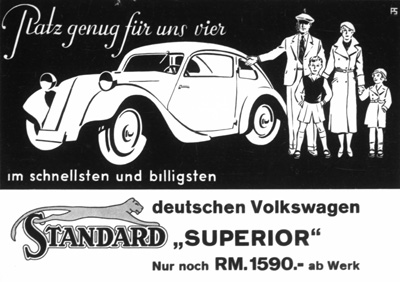
As far back as I can remember I've loved cars, trucks, motorcycles, pretty much anything with wheels that was self-propelled.  I had a large collection of Matchbox, Hot Wheels and Tonka vehicles which I would play with for hours at a time.  No magazine was safe around my house; I would cut out every car picture I could find and line them up in long ques not unlike the increasingly crowded Southern California freeways around my home.  But my biggest fascination was reserved for the Volkswagen. The ubiquitous Beetle (more that 21 million were produced) was easy to spot on the road, on billboards, and in magazine ads. Their ads were legendary; typical Teutonic efficiency resulted in a big impact with one picture, a pithy headline, and a minimum of text.


    More vintage VW adds here

Some crazy TV commercials from Jack Poet Volkswagen in the '60's
I liked the people who drove Volkswagens.  They always seemed to me to be friendly and sometimes mysterious - like the hippies who's lives were so different from my conservative upbringing.  I was attracted to the sounds VWs made; the put-put of their exhaust in contrast to the guttural growl of the big V8's that were prevalent at the time and their high-pitched single note horns. Always attracted to anything that was multi-purpose, the Type 2  (bus) was high on my list of favorite vehicles.  I would make play buses out of discarded refrigerator boxes. I loved the shape of  the Karmann Ghia, the not so sporty but beautifully curvaceous sports car, and the different look of the practical Squareback and Fastback.   I was ecstatic anytime I could score a ride in a VW.

When it came time for my first car, the VW was a natural choice.  My dad and I found a 1966 Type 1 sedan which had been converted to a "baha" bug.  This involved cutting off the front and back and adding fiberglass components, removing the back seat, mounting farm implement tires for flotation, attaching large driving lights and so on.  We bought it for a few hundred dollars and it proved to be an outstanding off road performer.  Its endurance was tested regularly in empty lots, fire access roads and riverbeds around Southern California.  It eventually broke beyond what was economically feasible to repair, so we stripped it and watched in morbid fascination while the magnetic crane hoisted it and fed it into the crusher.

Over the next few years my brothers and I along with some neighbors and friends bought, sold, traded, fixed up and occasionally totally destroyed just about every type of  air cooled Volkswagen we could get our permanently grimy hands on.  At times our back yard resembled a wrecking yard and I am grateful to my parents for allowing us to indulge in this hobby. I wish I'd thought to take pictures of all the Volkswagens and other vehicles I owned, but it wasn't a high priority at the time.

During those years I had several Type 2s from the '50s, '60s, and '70s including a double cab pickup, a Kombi converted to a camper, a transporter panel, and a Westfalia camper. This was back when they were plentiful and relatively inexpensive; as I recall the most I ever paid for any one was around $1,500.  I sold the last one in 1983 for about $600 - a nice white '71 Westy in which I had installed a rebuilt engine.  One day in 1983 I happened to visit a VW dealer to pick up a part.  In the lot was a new Vanagon Westfalia camper.  I looked inside and was awed by the luxurious appointments (compared to anything I had owned).  And it had a water cooled engine which meant a real heater and defroster.  I was wearing a Scandinavian military surplus jacket with fur collar to keep warm during winter driving so this made a big impression.  The price was $13,000 and the salesman assured me I could make payments as long as I had a steady job.  I was saving to buy a house, so didn't bite.  But I remembered that Westy and I knew that one day I would own one.

Next - Fast Forward 29 years